
Lisbon's Azulejos: A Route Through the City's Tiled Skin
From the national tile museum to the metro, a walking route through Lisbon's azulejos
Redação Dazona
·
·
6 min read
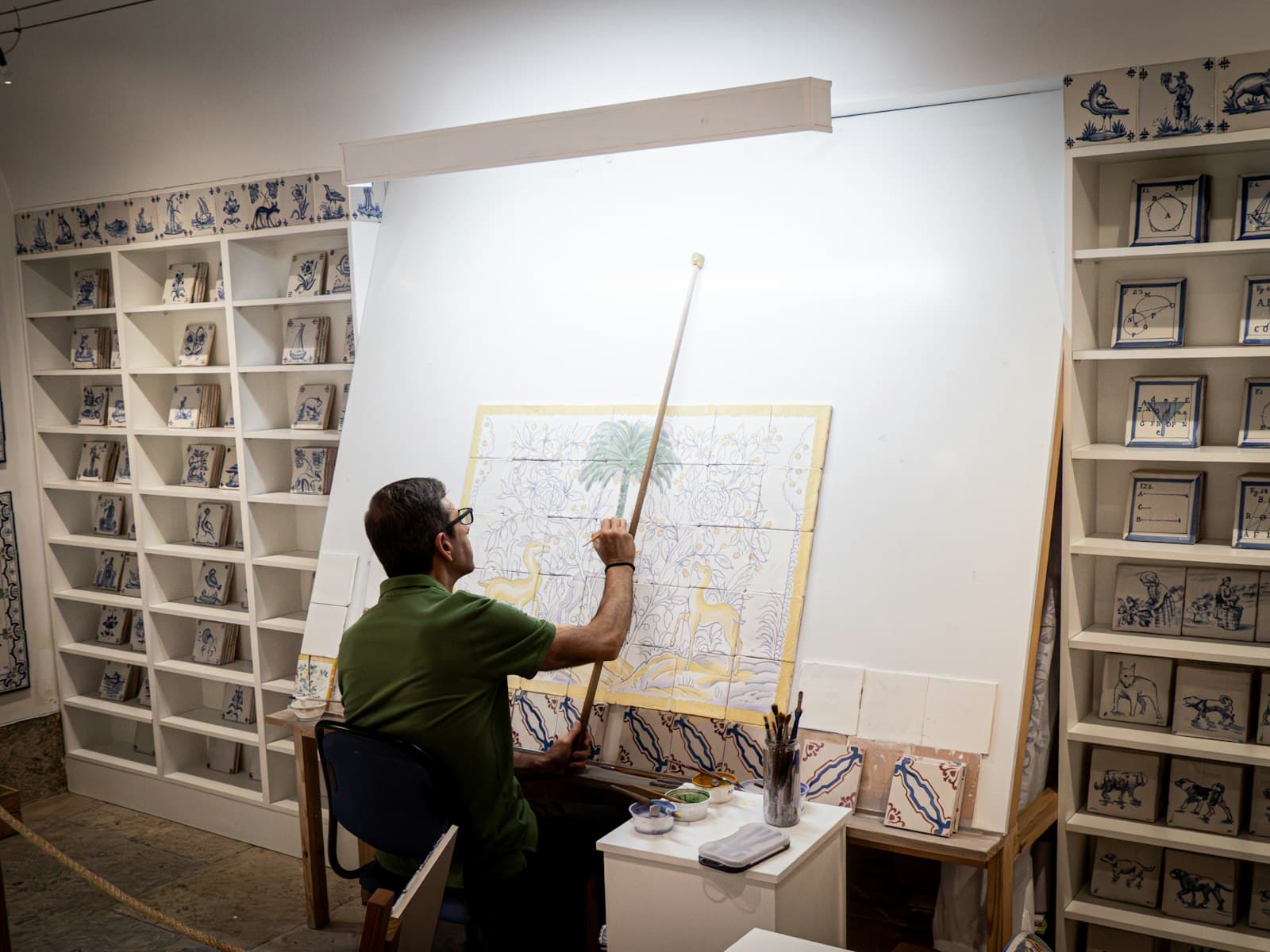
In Lisbon, tiles are not decoration — they are the city's skin. Azulejos cover entire façades, line church interiors, run down into metro stations and turn up where you least expect them: a doorway in a nondescript apartment block, the front of a neighbourhood tobacconist. Sixteenth-century panels sit a few streets from contemporary murals, and most of them still do the job they were made for, keeping damp out of the walls while throwing colour back at Lisbon's hard light.
You can do this route in one long day, but it works far better over two unhurried ones. Walk wherever you can. Azulejos reward people who move slowly and look up.
Start at the Museu Nacional do Azulejo
The obvious starting point is also the best one. The Museu Nacional do Azulejo occupies the former Madre de Deus convent in eastern Lisbon and traces five centuries of Portuguese tile-making, from Hispano-Moorish geometric patterns to contemporary work. Its star piece is the Great Panorama of Lisbon, a panel more than twenty metres long showing the city before the 1755 earthquake flattened most of what you see in it. It justifies the trip on its own.
The convent church, lined with gilded woodwork and blue-and-white tiles, is one of the most striking interiors in Lisbon and almost nobody visits it. Allow at least two hours. The museum sits outside the usual tourist circuits, so check opening days and how to get there on the official site before setting out.
Alfama and Mouraria: façades that survive
Back in the centre, wander uphill through Alfama and Mouraria without a fixed plan. This is the azulejo in its natural habitat: repeating patterned façades, devotional panels of saints above doorways, hand-painted house numbers. Look for the mass-produced nineteenth-century patterns, from the era when tiled façades became a middle-class fashion, and notice the gaps too. Those grey cement rectangles where tiles are missing tell a less charming story, which we will come back to.
- On Largo do Intendente, the façade of the old Viúva Lamego factory is one of the most photographed tile fronts in the city.
- Around Calçada de Santo André and the streets of Mouraria, hunt for the small devotional panels that were meant to protect the building.
- In Alfama, the streets between the cathedral and Santa Luzia keep their nineteenth-century patterns largely intact.
The metro as a tile gallery
Lisbon's metro has doubled as a gallery of contemporary azulejo since the 1950s, when the painter Maria Keil designed the first stations. Three stops are worth a trip in their own right:
- Olaias, on the red line, opened in 1998 to a design overseen by architect Tomás Taveira: an explosion of colour and geometry regularly listed among Europe's most spectacular stations.
- Parque, on the blue line, was reworked in the 1990s by Françoise Schein and Federica Matta around human rights and the Portuguese voyages. It is dark, dense and covered in text — read the walls.
- Campo Grande, on the yellow line, carries panels by Eduardo Nery that take the classic eighteenth-century azulejo figure and pull it apart with real wit.
A standard transport ticket is all you need. Avoid rush hour, and give yourself time to leave each station and come back in.
São Vicente de Fora: the hidden fables
Near the Feira da Ladra flea market, the Monastery of São Vicente de Fora holds one of the largest collections of baroque tilework in Portugal. Its cloisters are lined with eighteenth-century blue-and-white panels, including a series illustrating La Fontaine's fables — moralising animals nobody expects to meet in a monastery. It is calm, lightly visited, and the rooftop terrace has one of the best views over the Tagus. Check opening times on the official site, especially on Sundays.
Where to buy authentic tiles
Buying tiles in Lisbon is easy; buying well takes a little judgement. Three safe routes:
- Cortiço & Netos, near Mouraria, sells discontinued Portuguese industrial tiles rescued from closed factories — original pieces with a genuine history, at fair prices.
- Fábrica Sant'Anna, founded in the eighteenth century, still produces hand-painted tiles using traditional methods, with a shop in Chiado.
- Viúva Lamego, the historic Lisbon factory, now works mainly with artists and architects, but the name guarantees legitimate production.
For genuinely antique tiles, stick to established dealers who can document provenance, such as those around Príncipe Real. A serious seller knows where a tile came from and is not offended by the question.
The problem with stolen tiles
Those cement rectangles on Alfama's façades are not accidental. Tile theft is a real problem in Lisbon: antique panels and patterned tiles are stripped from derelict buildings and construction sites, then sold on to tourists who do not ask questions. Lisbon's city council banned the demolition of tiled façades back in 2013, and SOS Azulejo, a project run with Portugal's criminal police, has spent years fighting the trade.
The practical rule is simple: be suspicious of loose antique tiles sold at street markets with no paperwork. If the price looks too good for an eighteenth-century piece, it probably came off a wall it should still be on. Buying keeps the cycle going. Choose honest reproductions or rescued industrial stock instead.
Practical notes
- Split the route over two days: the museum and eastern Lisbon one day; Alfama, Mouraria and São Vicente the other.
- The metro takes contactless cards or the local navegante card; visiting the stations needs nothing more than a normal ticket.
- Museums and monasteries close on varying days — always check the official site.
- Wear proper shoes. Alfama and Mouraria mean steep, uneven cobbles.
- Photograph freely in the streets, but ask before shooting inside shops and antique dealers.