
Lisbon's Markets, from Fresh Fish to Flea Finds
Time Out Market, Campo de Ourique, Feira da Ladra and Arroios: when to go to each
Redação Dazona
·
·
5 min read
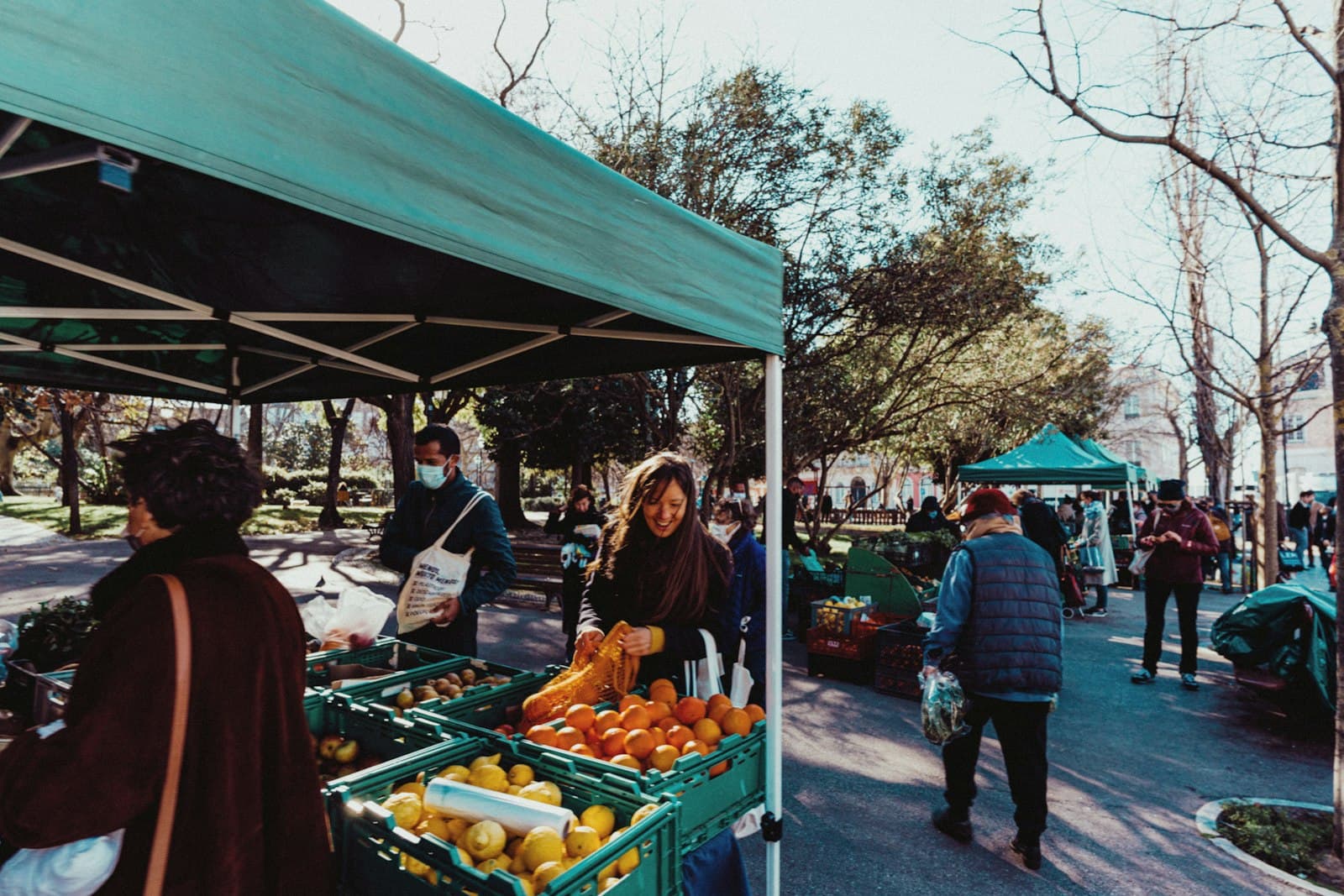
Lisbon currently runs two market cultures side by side. On one hand, the traditional neighbourhood market, where you buy fish and vegetables in the morning and everything shuts by lunchtime. On the other, the food hall: reinvented for eating and lingering, with chef counters and communal tables that stay busy into the night. Neither replaces the other, and the best way to understand the city is to do both.
These are the four we'd point you to, with the right time of day for each.
Mercado da Ribeira (Time Out Market)
The big market hall at Cais do Sodré lives two lives under one iron roof. In the morning, the traditional nave still trades as a fresh-produce market. Next door, the Time Out Market, opened in 2014, gathers counters from some of the best-known names in Portuguese cooking around long communal tables that are rarely quiet.
Let's be honest about it: this is the most touristy market in the city, the prices reflect that, and at dinner time finding a seat can be a sport. But the curation is genuine, and it remains the easiest way to sample good Portuguese cooking in a single sitting.
- Go for: tasting several chefs in one meal, no bookings needed.
- Best time: weekday lunch before half twelve, or late afternoon between the rush hours.
- Avoid: Friday and Saturday nights, unless you enjoy hunting for tables.
Mercado de Campo de Ourique
The neighbourhood-scale version of the same idea, and for many locals the better one. The market dates from 1934 and was renovated in 2013: the fish, fruit and flower stalls still hold the centre, ringed by small eateries serving petiscos, seafood and pastries. The scale is more human than the Ribeira and the crowd is mostly from the surrounding streets.
Campo de Ourique sits outside the city-centre circuits, which is half the reason to like it. Ride tram 28 to the end of the line and pair the market with a wander through the neighbourhood and the Prazeres cemetery, which is far more interesting than it sounds.
- Go for: a proper lunch without the crowds, in a market that still serves the people who live around it.
- Best time: morning for the fresh stalls, lunchtime for the food counters.
- Note: the traditional stalls close early; the dining side carries on through the afternoon and evening.
Feira da Ladra
Lisbon's flea market is the oldest in the city, with documented origins in the thirteenth century, and it has filled Campo de Santa Clara, behind the church of São Vicente de Fora, since 1903. It runs on Tuesdays and Saturdays, and it is a different proposition entirely: you don't come here to eat, you come to dig. Loose azulejo tiles, vinyl, old uniforms, crockery from dismantled households, books, and entire stalls of objects that defy classification.
Two strategies work. Arrive early, around nine, to catch the best pieces before the dealers do. Or turn up in the early afternoon, when sellers start packing up and prices drop. Haggle without embarrassment — it's expected — and bring cash, as few stalls take cards.
- Go for: antique tiles, records, and finds that exist nowhere else.
- Best time: Tuesday or Saturday, early morning, or after 2pm for bargains.
- Bonus: the National Pantheon and São Vicente de Fora are right next door.
Mercado de Arroios
Lisbon's most multicultural market, in one of its most diverse neighbourhoods. In the circular hall on Praça do Chile's doorstep, fresh-produce stalls share space with ingredients from half the world — Bangladesh, Nepal, China — in an accurate portrait of who actually lives around it. It is a morning market, Monday to Saturday, and almost entirely tourist-free.
Don't expect spectacle or chef counters: this is a working market, with everything good that implies. Pair the visit with lunch in the Asian eateries and old-school tascas in the surrounding streets, some of the best cheap tables in the city.
- Go for: a traditional market still doing its job, and shopping you won't find in a supermarket.
- Best time: Saturday morning; check current hours on the city council's site before you go.
Traditional or food hall?
It isn't really a choice; it's a question of the hour. Fresh markets live in the morning and fade after lunch; food halls only wake up at midday and fill up at night. To get the best of both, spend the morning at Arroios or among Campo de Ourique's stalls, then come back to the same market's food counters for dinner.
Practical notes
- Fresh markets are morning affairs; after 1pm there's little left. Get there early.
- For the Feira da Ladra, bring cash and comfortable shoes: Campo de Santa Clara is cobbled and the fair sprawls.
- Opening hours shift with the seasons and with renovation works; check each market's official page or the Lisbon city council site.
- Sunday is a poor day for markets in Lisbon: the traditional ones close and only the food halls operate.