
Beaches Near Lisbon Without a Car: The Honest Guide
From Carcavelos to Meco, every beach in this guide is reachable by train, bus or boat
Redação Dazona
·
·
6 min read
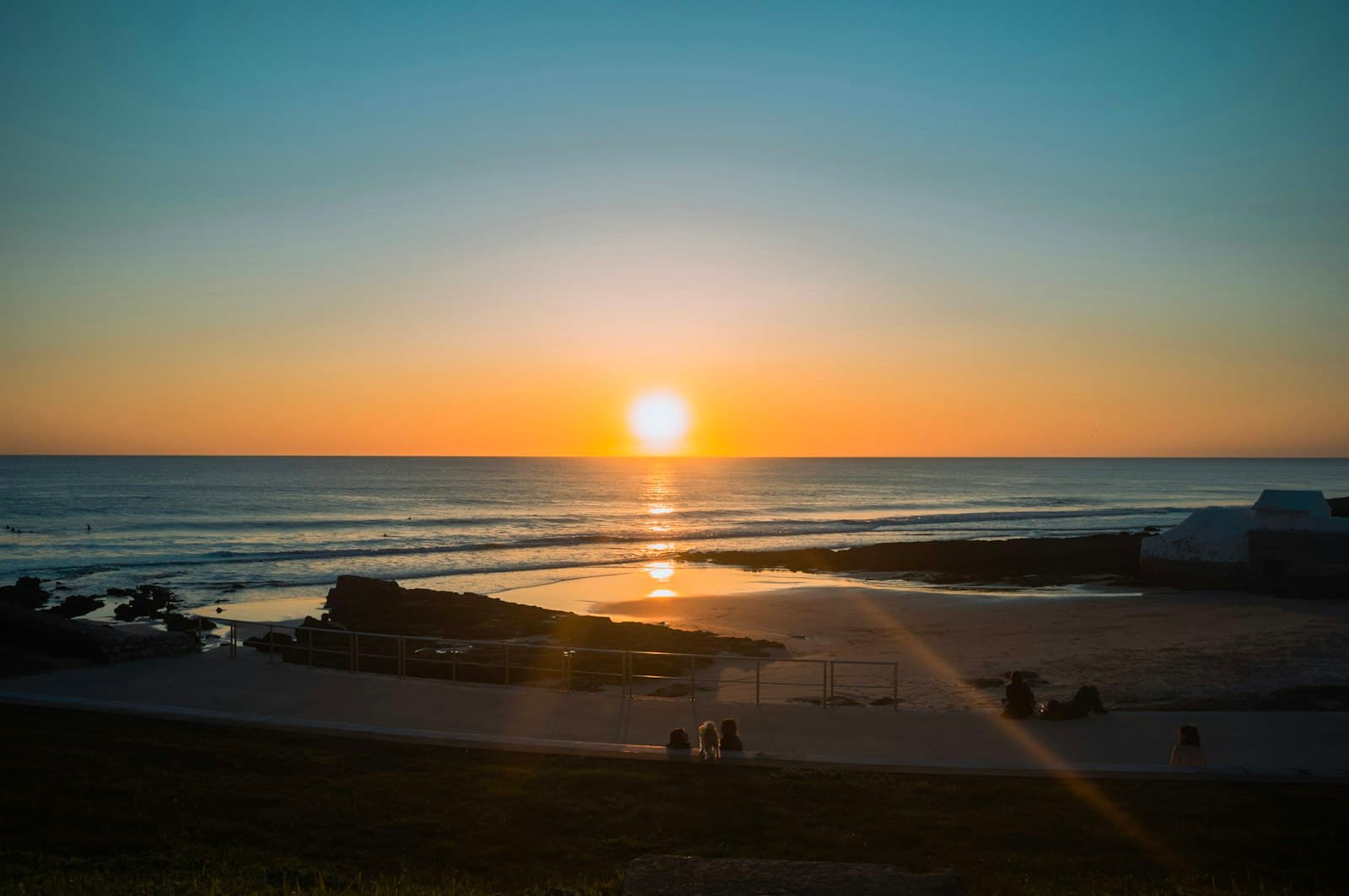
Lisbon has a rare advantage among European capitals: proper beaches less than an hour from the centre, almost all of them reachable by public transport. You do not need to hire a car for a beach day — and in mid-August a car is more punishment than convenience, between the queues on the 25 de Abril bridge and parking that simply does not exist.
This guide covers five tested destinations, from easiest to most adventurous, with a dose of honesty most round-ups skip: the water is cold, the wind is real, and locals have their own calendar for going to the beach. Knowing this in advance saves disappointment.
Carcavelos: the gateway beach
Carcavelos is Lisbon's urban beach par excellence. Take the Cascais line train from Cais do Sodré and you are there in roughly twenty minutes; the walk from station to sand takes about ten more. The beach is wide, with surf schools for beginners, beach bars, and room for everyone outside peak weekends.
It is also the busiest beach in the region, precisely because it is so easy. In July and August, arrive before 10am or accept a spot far from the water. Out of season it is perfect for a morning surf or a long walk with the São Julião fort at one end.
Costa da Caparica: the endless sands
Across the Tagus, Costa da Caparica stretches for kilometres of unbroken beach. There are two classic car-free routes:
- A direct Carris Metropolitana bus from Lisbon (line 3710, departing from the Areeiro area). Check the route and timetable on the official site, as the network has been reorganised in recent years.
- The ferry from Cais do Sodré to Cacilhas, then a bus on to Caparica (line 3011). Slower, but the river crossing is half the fun.
The town itself has affordable fish restaurants and an unpretentious, local feel. For fewer people, walk south: the further you get from the centre of Caparica, the more space and the more dunes.
Meco: for a full day out
The Meco area, in the Sesimbra district, is a full-day beach: wild sands, cliffs, pine forest behind you and open Atlantic in front. Without a car, the standard route is the Carris Metropolitana 3721 bus from Lisbon (Sete Rios) to Sesimbra, then a local connection to Aldeia do Meco; extra seasonal services to the beaches usually run in summer. The whole trip takes around two hours, so leave early — and check return times on the official site before you set out, because being stranded at Meco in the early evening is no fun at all.
The reward is worth the effort: of all the beaches in this guide, it is the one that feels furthest from everything.
Guincho: wind, surf and scenery
Guincho, inside the Sintra-Cascais natural park, is probably the most beautiful beach on this list and the least suited to lying on a towel. The nortada — the strong northerly wind that picks up on summer afternoons — turns the sand into a sandblaster, which is exactly why the beach is a favourite for surfing, windsurfing and kitesurfing.
Car-free, take the train to Cascais and then a municipal MobiCascais bus towards Guincho; confirm the line and times on the MobiCascais site. Alternatively, hire a bike in Cascais and ride the coastal cycle path, one of the prettiest routes in the region. Go in the morning, before the wind builds, and always bring a jacket.
Ribeiro do Cavalo: the hiker's reward
Praia do Ribeiro do Cavalo, near Sesimbra, is the photo you have seen circulating online: turquoise water, pale pebbles, an amphitheatre of cliffs. It looks Mediterranean; it is pure Atlantic. There is no road access — you reach it on foot via a steep trail from the edge of Sesimbra, about half an hour of descent with some slippery sections, or by boat from the town's harbour.
Wear closed shoes, carry your own water and food (there are no facilities of any kind), and skip the trail in strong wind or after rain. From Lisbon, the starting point is the same 3721 bus to Sesimbra.
The truth about the water — and when locals actually go
Now for the part the postcards leave out: the sea along the Lisbon coast is cold. Even in August it rarely climbs past 18 or 19 degrees, and on some summer days the nortada drags deep water up to the shore and the temperature drops without warning. Nobody floats around for hours here the way they do in the Algarve or the Mediterranean. Swims are short and bracing, and there is no shame in a wetsuit.
Locals know all this and behave accordingly. They avoid August, when the beaches belong to people on holiday, and prefer June and September: a more tolerable sea, reliable sun, half the crowd. September in particular is the region's badly kept secret. And on stray hot days in May or October, the improvised after-work beach trip to Carcavelos is a Lisbon tradition in its own right.
Practical notes
- Load a navegante card or use contactless; the metropolitan pass covers the train, the ferry and regional buses.
- Bus timetables change between summer and winter — always check the official Carris Metropolitana, CP or MobiCascais sites.
- Bring sunscreen, water and a hat. Outside the towns, beach facilities are sparse.
- Flags matter: red means no entering the water, yellow means no swimming. The Atlantic has serious currents — respect the signs.
- For Ribeiro do Cavalo, walking shoes and a light backpack. Do not attempt the descent in flip-flops.